

What you'll learn in 30 seconds
Polyester and cotton socks differ mainly in breathability, durability, and moisture management. Cotton socks are soft, breathable, and comfortable for everyday wear, while polyester socks are more durable and moisture-wicking, making them popular for athletic or performance use. Choosing between the two depends on whether comfort, durability, or sweat management is the priority.
What Are Cotton Socks?

Cotton socks are socks knitted from natural cotton fibres, valued for their softness, breathability, and gentle feel on the skin. They are a popular choice for casual wear, office use, and mild climates. Most cotton socks are blended with a small percentage of nylon, polyester, or elastane to improve durability and shape retention.
Cotton fibres absorb a lot of moisture. The standard textile measure for this is called moisture regain. Cotton has a moisture regain of around 8.5 percent at standard conditions. Polyester sits at only 0.4 percent.
In simple words, cotton soaks up sweat. Polyester does not.
This makes cotton feel cool and dry during light activity. It also makes cotton feel heavy and damp once it gets fully wet.
One thing most buyers miss: the word "cotton" on a label tells you very little. The fibre length, spinning method, and whether it is organic all change how the sock feels and lasts. A good cotton sock should feel soft without pilling after a few washes. If you want to dig into this, we explain it in our organic cotton versus regular cotton guide.
Cotton Types You Will See on Sock Labels
The word "cotton" on a label hides a lot of detail. Two socks can both say "100% cotton" and feel completely different. The difference comes down to fibre length, how the fibre is processed, and how it is grown. Here is what each label term actually means.
- Combed cotton: Before the cotton gets spun into yarn, it goes through a fine comb that pulls out the short, weak fibres and any plant debris. What is left is the long, straight fibre only. This sounds like a small detail, but it changes everything. The yarn becomes smoother, stronger, and less prone to pilling.
- Mercerized cotton: Take combed cotton yarn, soak it in a controlled alkali bath under tension, and the fibre permanently changes shape. The cross section rounds out, the surface smooths, and the yarn picks up a soft sheen. The change is not cosmetic. Mercerized cotton is stronger, holds dye deeper, and keeps its colour through years of washing.
- Organic cotton: This is cotton grown without synthetic pesticides, no chemical fertilisers, and no GMO seed. The certifications that matter are GOTS and OCS, and a real organic sock will name one of them. The fibre itself feels the same as conventional cotton. What changes is the residue. Conventional cotton can carry trace chemicals from the field through to your skin. Organic does not. For anyone with eczema or contact sensitivity, this matters more than the marketing suggests.
- Pima and Egyptian cotton: These are the long staple varieties. Standard cotton fibres are about 22 to 25 millimetres long. Pima and Egyptian fibres stretch to 35 millimetres or more. Longer fibres mean fewer fibre ends sticking out of the yarn, which means a smoother surface and less pilling.
- Recycled cotton: Made from cotton scraps left over from clothing manufacturing or from old textiles broken back down to fibre. The process saves significant water and avoids growing new cotton on new land.
The percentage on the label tells you how much cotton is in the sock. The type of cotton tells you what that cotton is actually worth. A sock made with 80 percent combed organic cotton will outlast and outfeel a sock made with 100 percent generic cotton, every time.
What Are Polyester Socks?

Polyester socks are made from a synthetic, plastic based fibre spun from petroleum. The fibre is engineered to be strong, lightweight, and resistant to water absorption. These three traits are what make polyester the default choice for athletic, performance, and travel socks across the industry.
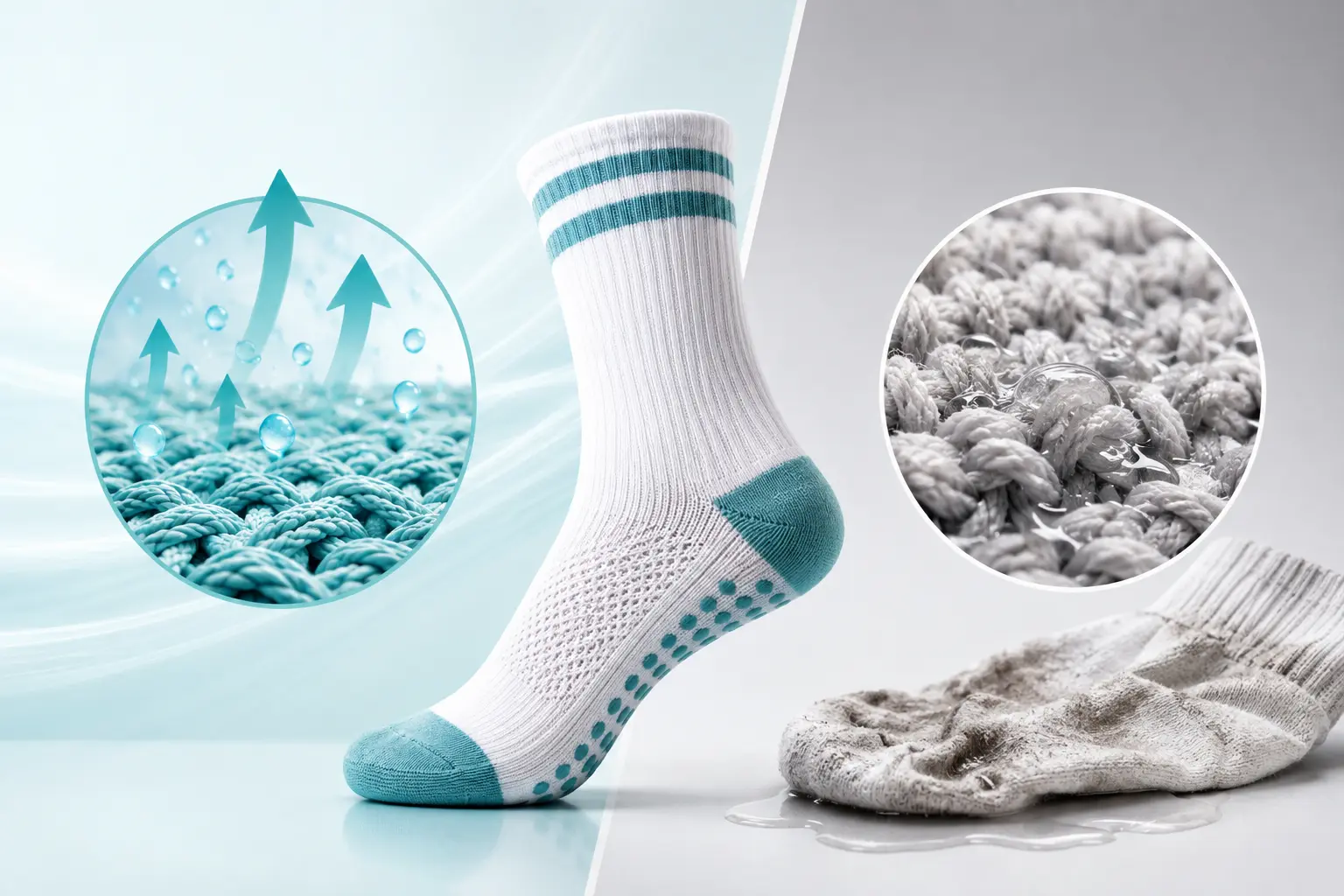
In a sock, this plays out in a specific way. Polyester does not soak up sweat the way cotton does. Instead, the moisture sits on the fibre surface and travels along it toward the outside of the sock. This movement is called wicking, and it is the whole reason polyester became the go-to sport sock material.
When the knit is built right, the foot stays dry. When the knit is cheap and too dense, the sweat has nowhere to evaporate, and the foot feels clammy. The label may say "100% polyester" in both cases, but the construction is what decides if it works.
You will rarely find a true 100 percent polyester sock on the shelf, and there is a reason. Pure polyester lacks stretch, holds smell, and can feel slick against the skin. Most polyester socks are blended with a little elastane for stretch, with nylon for strength at the heel and toe, and sometimes with cotton or merino wool for softness and odour control. The polyester does the performance work. The other fibres make the sock wearable for everyday use.
Cotton vs Polyester Socks: Full Comparison

The 7 Real Differences Between Cotton and Polyester Socks
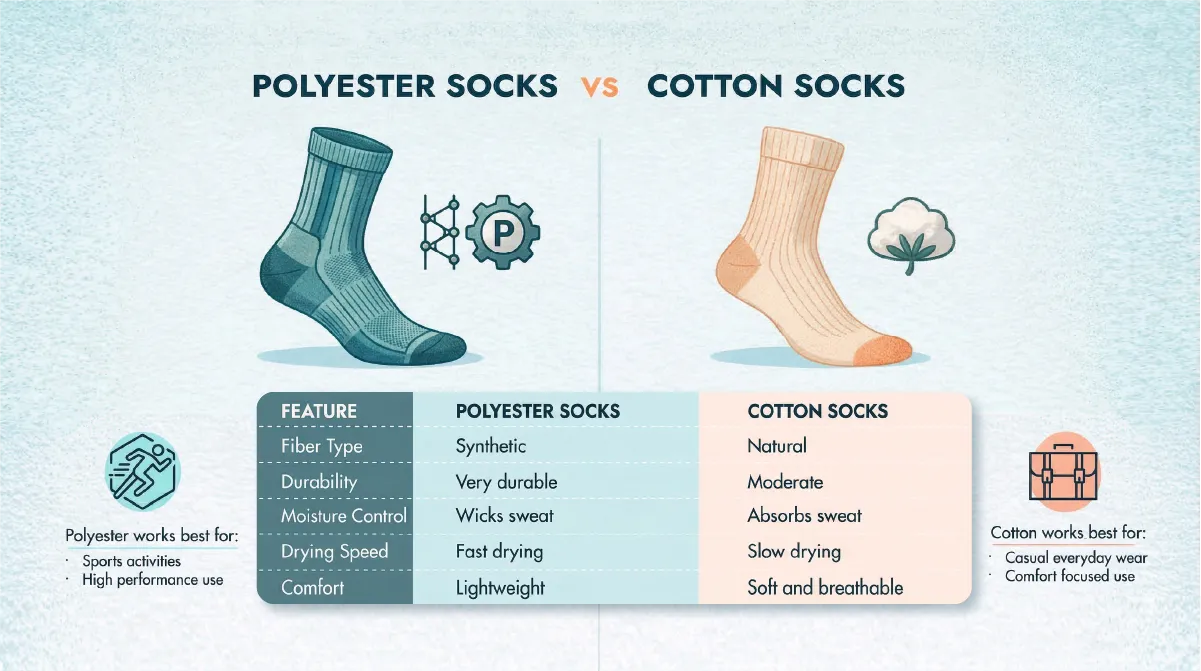
This is where the real differences show up. Let's break each one down. Here is what actually changes between the two.
1. Breathability
Cotton breathes better than polyester in most everyday conditions. The natural fibre structure allows air to move through the fabric easily.
Polyester can also breathe, but it depends heavily on knit gauge. A loose knit polyester sock can feel airy. A tight knit polyester sock can trap heat.
Winner for casual wear: Cotton.
2. Sweat Wicking vs Sweat Absorption
This is the most misunderstood point. Wicking and absorption are not the same.
Cotton absorbs sweat into the fibre. It feels dry at first, then heavy once saturated.
Polyester does not absorb. It moves sweat along the surface to the outer face of the sock. From there, the sweat can evaporate.
For short bursts of light sweat, cotton handles it well. For long, heavy sweat sessions, polyester moves the moisture out faster.
Winner for athletes and sweaty feet: Polyester or a polyester heavy blend.
3. Odor and Smell
Here is a finding most people miss. Polyester clothes hold smell more than cotton, and the reason is bacterial.
A 2014 study tested this. Researchers collected shirts from 26 people after a spinning class. A trained odor panel rated polyester shirts as significantly more unpleasant than cotton. They also found that micrococci, a bacteria linked to body odor, grew almost only on polyester.
In simple terms, polyester gives smell causing bacteria a better place to live. Cotton does not.
This is why your old cotton work socks fade in colour but stay neutral in smell. A polyester sock can still smell strong even after washing.
Winner: Cotton.
4. Durability and Shape
Polyester wins here clearly. The synthetic fibre does not weaken from repeated washing the way cotton does. Polyester socks hold their cuff tension longer. They resist holes at the heel and toe better.
Cotton socks need more care. Hot washes and dryers shorten their life. With cold washes and air drying, they can last a long time.
Winner: Polyester.
5. Comfort for Sensitive Skin
Cotton is the gentler material for skin. It is hypoallergenic for most people. It does not trap as much heat near the skin. It absorbs sweat instead of leaving it on the skin surface.
For people with eczema, diabetes, or skin sensitivity, cotton is the safer default. Many doctors specifically recommend natural fibres for these cases.
Winner: Cotton.
6. Drying Time
Polyester dries roughly two to three times faster than cotton of the same weight. This matters for travellers, athletes, and anyone who washes socks in a hotel sink.
If you only own four pairs and travel often, polyester or a blend gives you more flexibility.
Winner: Polyester.
7. Environmental Impact
This one is mixed.
Cotton is biodegradable. It returns to the soil. But conventional cotton uses heavy water and pesticide loads to grow. Organic cotton reduces this footprint.
Polyester is petroleum based and does not biodegrade. It also sheds microplastic fibres in the wash. A peer reviewed study found that polyester samples shed 161 milligrams of microfibres per kilogram of textile, on average, in each wash cycle.
If sustainability matters to you, organic cotton or a recycled polyester blend reduces some of this impact. We focus on these options in our sustainability page. We also offer eco-luxe wool socks for buyers who want a low impact natural fibre.
Winner: Organic cotton, with limits.
Which Sock Material Is Better For Your Specific Use Case
The right answer depends on what you do with your feet. Here is a quick guide.
For Athletes and Sports
Polyester or a polyester heavy blend wins. Your feet sweat hard during running, cycling, hiking, or gym sessions. You need that sweat moved off the skin fast.
Look for blends in the 60 to 75 percent polyester range. Add nylon reinforcement at the heel and toe. We make custom retro athletic socks for sports teams and brands that need this performance level.
For Sweaty Feet in Daily Life
A blend works best here. Pure cotton soaks up sweat and stays wet. Pure polyester wicks well but builds smell. A 60 percent cotton and 30 percent polyester blend with elastane gives both comfort and moisture control.
For Sensitive Skin or Eczema
Choose cotton, ideally organic cotton. Avoid pure polyester. The smooth synthetic surface can irritate already inflamed skin. Natural fibres breathe and let sweat absorb rather than sit against the skin.
For Everyday Casual Wear
Cotton or a cotton heavy blend. You do not need extreme wicking for walking, sitting at a desk, or running errands. You do need softness and breathability.
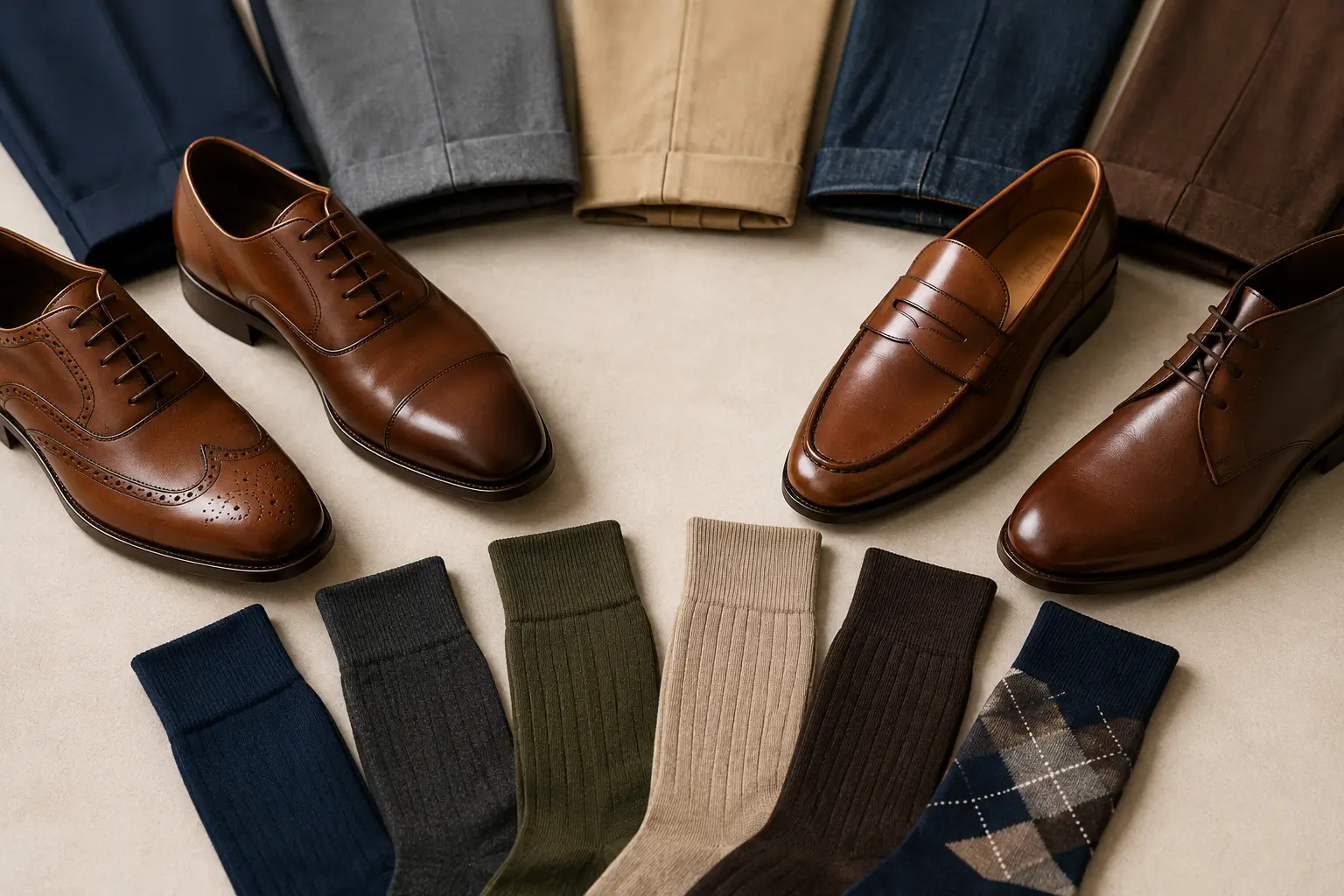
For Dress Socks
A fine gauge mercerized cotton blend works best. Look for 75 to 80 percent cotton with polyamide and a touch of elastane. This is the standard for premium dress wear.
For Cold Weather and Hiking
Cotton is the wrong choice here. Wet cotton in cold conditions pulls heat from the foot. This is the reason hikers say "cotton kills."
Wool or a wool blend is the better choice here. Unlike cotton, wool keeps you warm even when wet, which is why it has been the standard for cold weather socks for over a century. Wool socks handle this kind of wear well.
What About Blends? The Real World Answer
In real life, most quality socks are not 100 percent of anything. Pure cotton stretches out. Pure polyester smells. So manufacturers blend.
From our own production runs, we have found a clear pattern. Blends below 60 percent cotton lose the soft hand feel that buyers expect, even though durability and shape retention improve. Blends above 85 percent cotton start to sag at the cuff after a season of wear, even with elastane. The 65 to 75 percent cotton range is where most premium socks land, and there is a reason. It is the band where comfort and structure both hold up.
Common Blend Ratios and What They Do
- 65 to 75 percent cotton, 20 to 30 percent polyester, 3 to 5 percent elastane: A balanced everyday sock. Comfortable, holds shape, handles light sweat.
- 60 to 75 percent polyester, 20 to 30 percent cotton or nylon, 3 to 5 percent elastane: Performance focused. Strong wicking, fast drying, holds up to heavy use.
- 80 percent cotton, 17 percent polyamide, 3 percent elastane: A premium dress blend.
- Cotton with merino wool. Adds warmth and natural odor resistance.
Why Elastane Matters
Elastane is also called spandex or Lycra. It is the small percentage that lets the sock hug your calf and arch. Without it, the sock falls down. Most socks need 2 to 5 percent elastane to stay up and keep shape.
What About Nylon and Polyamide?
Nylon and polyamide are the same family of synthetic fibre. They add strength and abrasion resistance. You will often see them in the heel and toe zones where wear is highest.
A small amount of nylon, around 10 to 20 percent, can double the life of a sock. It does not change how the sock feels.
How to Choose Between Cotton and Polyester Socks
Use this short framework when you stand in front of a sock display.
Step 1. What will you do in these socks? Sit, walk, run, or train hard.
Step 2. Do your feet sweat a lot? Yes or no.
Step 3. How long do you want the pair to last? One season or several years.
If your answers lean to low activity, low sweat, and short term use, choose cotton.
If your answers lean to high activity, high sweat, and long term use, choose polyester. A polyester heavy blend also works.
If you are mixed, choose a balanced cotton polyester blend.
How to Make Your Socks Last Longer
The material is only half the story. Care is the other half.
- Wash in cold water. Hot water shrinks cotton and breaks elastic fibres.
- Turn socks inside out before washing. This reduces friction on the visible side.
- Air dry when you can. Dryer heat is the biggest enemy of elastic.
- Avoid fabric softener. It coats the fibres and reduces wicking and absorbency.
- Use a mesh laundry bag for socks. It also catches microplastic fibres from polyester.
For more on cotton care, read our guide on how to care for cotton socks.
The Bottom Line
There is no single best sock material. There is only the best material for your foot, your activity, and your day.
Cotton wins for comfort, breathability, and sensitive skin. Polyester wins for sweat control, drying speed, and durability. A thoughtful blend gives you most of both.
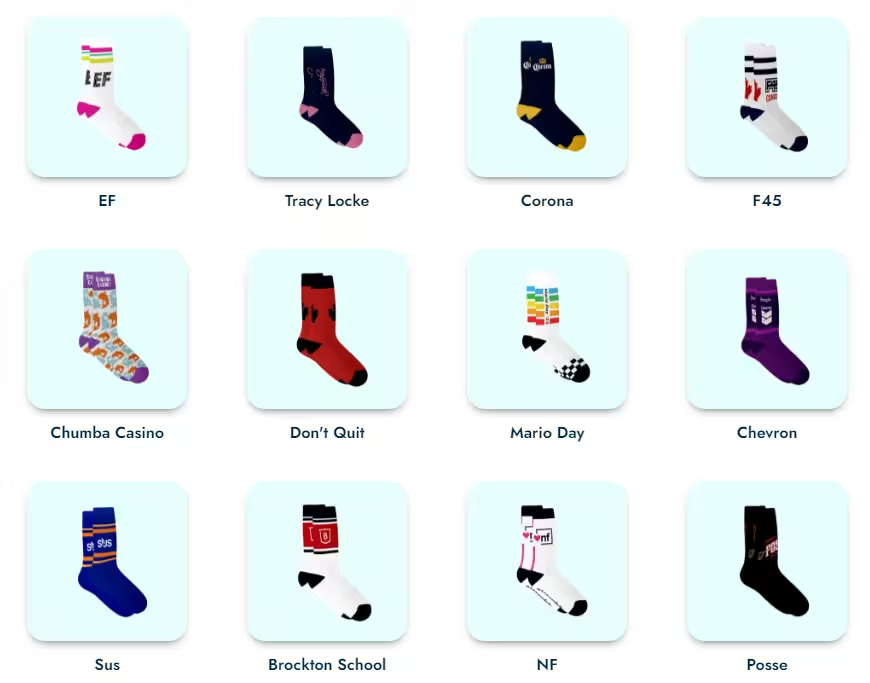
Are you designing custom socks for your team, brand, or event? We can help you pick the right blend. We have made socks for Google, Netflix, and over 500 B2B brands. Our work covers everything from organic cotton to performance polyester blends.
You can start your custom sock design here. Free designs. Seven day turnaround. Made in Italy.
Frequently Asked Questions
Create socks your team will actually be proud to give away